Solid Brass vs. Plated Metal in Lighting
Solid H62/H65 brass is non-magnetic and patinates naturally; plated steel or zinc alloy costs less upfront but pits once coating wears.
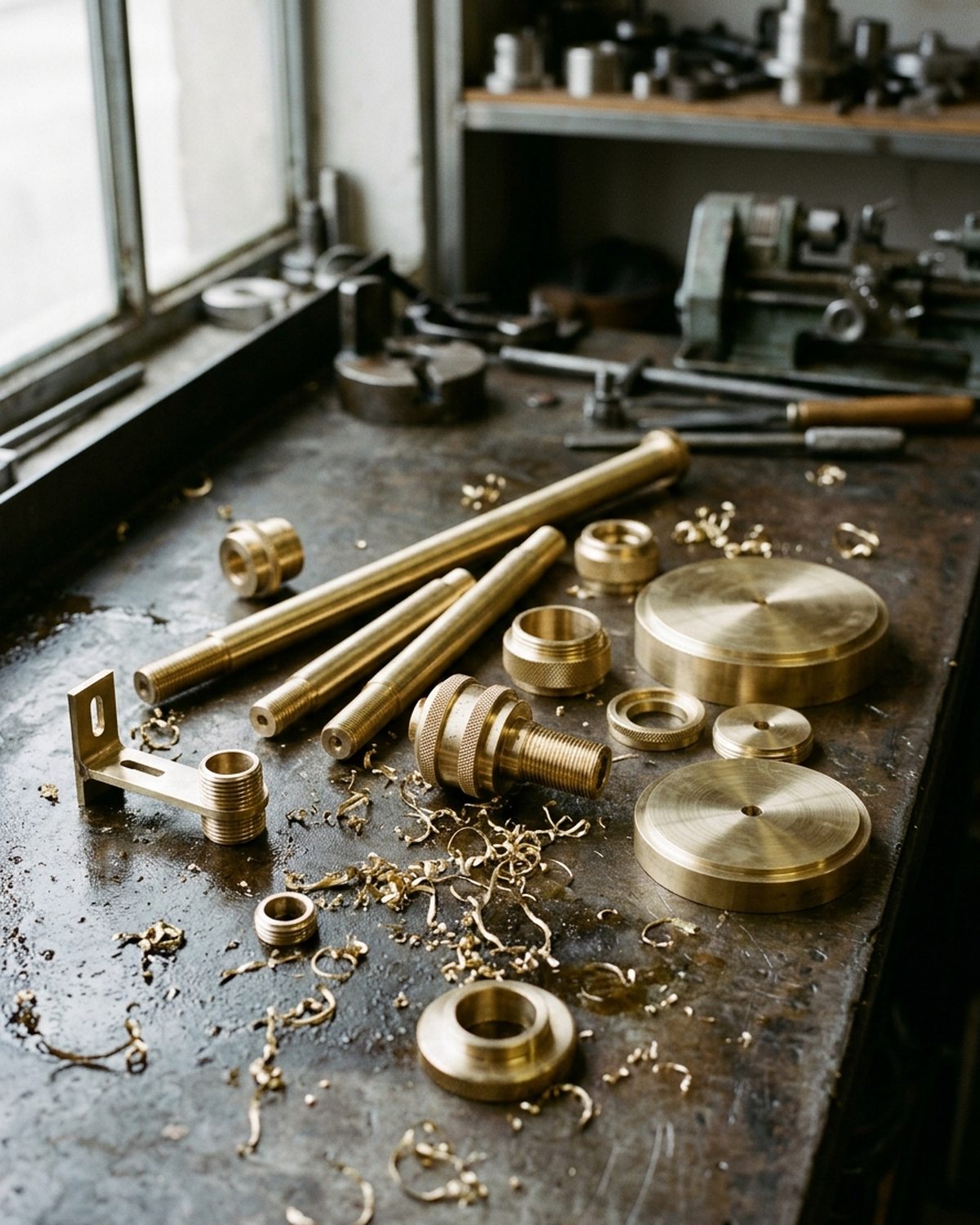
Walk down ten showroom aisles in Guzhen and nine salespeople will point to a warm gold lamp base and call it “all copper” (全铜). In reality, Chinese lighting workshops mean brass (copper-zinc alloy, typically H62 or H65), and budget factories frequently substitute electroplated mild steel, spun aluminum, or die-cast Zamak zinc alloy under a tinted clear coat.
How workshops and buyers tell solid brass from plated substitutes
| Material | Magnet check | Hidden-thread scratch check | Coastal / humid aging behavior |
|---|---|---|---|
| Solid H65 / H62 brass | Non-magnetic (note: internal steel threaded rods inside a hollow stem will still pull a magnet — test an isolated canopy or arm) | Uniform yellow-gold metal beneath the surface finish | Develops darker bronze oxidation slowly if unlacquered; never blisters or flakes red rust |
| Electroplated steel / iron | Strongly magnetic across thin shades, canopies and arms | Silver-grey steel under a thin flash plating | Pits and blooms orange-brown rust once humidity breaches pinholes in the lacquer |
| Brass-plated zinc die-casting (Zamak) | Non-magnetic (fools the magnet test alone) | Dull pale grey zinc alloy inside tapped screw holes | Prone to white powdery blistering (“zinc pest” / corrosion) in damp bathrooms or coastal air |